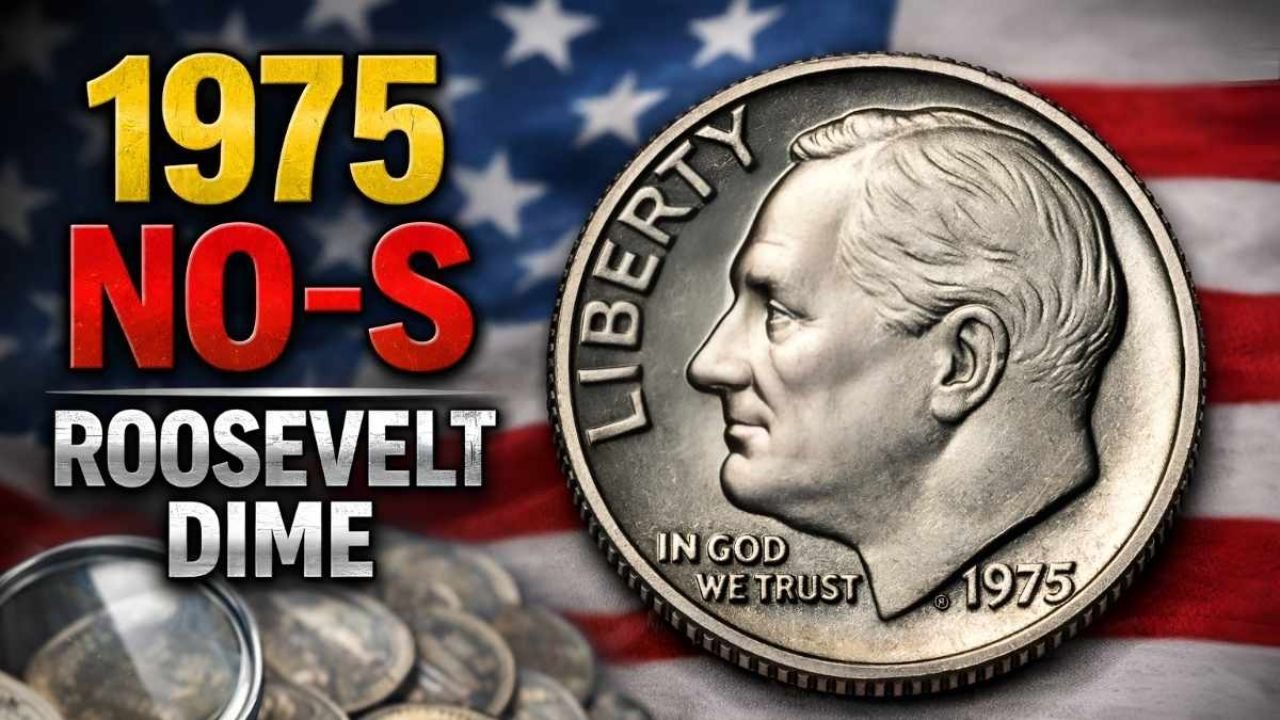
In the world of elite numismatics, true rarity is rarely planned. Sometimes, it is born from oversight. The 1975 No-S Roosevelt Dime stands as one of the most extraordinary minting errors in United States coinage history—an anomaly that was never meant to exist.
While sensational headlines often inflate its value into the hundreds of millions, the real story behind this coin is far more compelling. It is a case study in scarcity, authentication, and how a single missing detail transformed an ordinary proof coin into one of the most coveted modern rarities ever produced by the United States Mint.
The Origins of the Roosevelt Dime
The Roosevelt Dime was first introduced in 1946 to honor President Franklin D. Roosevelt following his death in 1945. Designed by John R. Sinnock, the coin replaced the Mercury Dime and quickly became a fixture in American commerce.
By the mid-1970s, the design had been in circulation for nearly three decades. Most dimes were mass-produced for everyday transactions. However, special proof versions were struck for collectors using polished dies and specially prepared planchets, resulting in mirror-like finishes and exceptional detail.
These proof coins were primarily minted at the San Francisco Mint and typically carried an “S” mint mark to indicate their origin.
That small letter would become the center of one of the greatest modern minting mysteries.
The Error That Should Not Exist
In 1975, a limited number of proof dimes were struck without the “S” mint mark. The omission occurred due to the use of a die that lacked the mint mark—a critical oversight in the production process.
Proof coins from San Francisco were not supposed to be released without that identifying mark. Unlike circulation errors caused by wear or damage, this was a die-level mistake embedded directly into the coin’s design.
The result was the 1975 No-S Roosevelt Dime—a proof coin that defied its own manufacturing standards.
Only a tiny number of authenticated examples are known to exist. This extreme scarcity is what elevates the coin from curiosity to legend.
Rarity and Market Reality
Speculation surrounding the coin’s potential value often spirals into dramatic figures. While some imagine hypothetical hoards worth hundreds of millions collectively, the verified market tells a more grounded—yet still remarkable—story.
High-grade authenticated examples have sold for hundreds of thousands of dollars at auction. In the upper tiers of certified condition, prices have approached or exceeded half a million dollars, depending on eye appeal and provenance.
For a ten-cent coin, that performance is extraordinary.
However, it is important to separate speculation from reality. The $300 million narrative reflects a theoretical aggregate value scenario, not a single confirmed transaction.
Still, within the modern coin market, few pieces rival its combination of verified rarity and documented auction strength.
Why Advanced Collectors Value It
Elite collectors pursue three key attributes: scarcity, story, and certification. The 1975 No-S Roosevelt Dime offers all three.
1. Documented Scarcity
Unlike many coins that are merely low-mintage, this variety is defined by the number of surviving examples. The population count remains extremely limited, creating true supply constraints in a market driven by demand.
2. A Compelling Narrative
This was not an experimental issue or a commemorative rarity. It was a production oversight. The accidental nature of its creation adds mystique and reinforces its status as an anomaly in modern minting history.
3. Investment-Grade Authentication
Coins of this caliber must be professionally graded and authenticated. Third-party grading services evaluate strike quality, preservation, and originality, assigning standardized numerical grades that heavily influence market value.
Without certification, the coin cannot command premium prices.
The Importance of Authentication
Because of its high value, the 1975 No-S dime is a target for counterfeiting and alteration. Some individuals attempt to remove mint marks from ordinary proof dimes, hoping to replicate the rarity.
Authentication involves microscopic examination of the die characteristics, surface integrity, and overall production consistency. Only certified examples from recognized grading authorities are considered legitimate in the premium market.
For serious investors, provenance—the documented ownership history—also plays a significant role in valuation.
Market Impact If More Were Found
A discovery of additional genuine examples would undoubtedly create immediate headlines. Yet the impact on value would depend on the number uncovered.
If only one or two additional coins surfaced, prices could remain stable or even increase due to renewed media attention. However, a large unexpected hoard could recalibrate scarcity metrics and soften auction results.
That dynamic is part of what makes rare coin investing both exciting and complex. Scarcity must be measured, not assumed.
A Snapshot of 1975 America
The mid-1970s were marked by economic uncertainty, inflation, and cultural transition. Proof sets were popular among collectors seeking tangible assets during volatile financial periods.
Ironically, in a time of careful production oversight, a simple missing mint mark slipped through quality control—creating one of the rarest modern dimes ever struck.
It is a reminder that even in tightly regulated systems, human error can create unintended legacy.
Cultural Fascination with Error Coins
Error coins captivate both seasoned collectors and newcomers because they challenge assumptions about perfection. In a world built on precision manufacturing, mistakes become treasures.
The 1975 No-S Roosevelt Dime exemplifies this phenomenon. Its value lies not in precious metal content or limited mintage planning, but in deviation from expectation.
Imperfection, in this case, became priceless.
Is It Worth $300 Million?
No authenticated single specimen has ever sold for anything close to that figure. The headline value reflects speculative aggregation scenarios rather than verified auction data.
That said, within the modern U.S. coin landscape, it remains one of the most valuable proof error coins ever produced.
Its true worth lies in documented scarcity, sustained collector demand, and its position within numismatic history.
Final Thoughts
The 1975 No-S Roosevelt Dime stands as a defining modern rarity—an accidental masterpiece born from omission. It combines verified scarcity, compelling backstory, and strong auction performance, making it one of the most respected error coins in American numismatics.
Beyond headlines and exaggerated valuations, its legacy rests on something far more enduring: the intersection of precision, oversight, and chance.
For collectors and investors alike, it represents the timeless truth of rare assets—sometimes the smallest details create the greatest value.