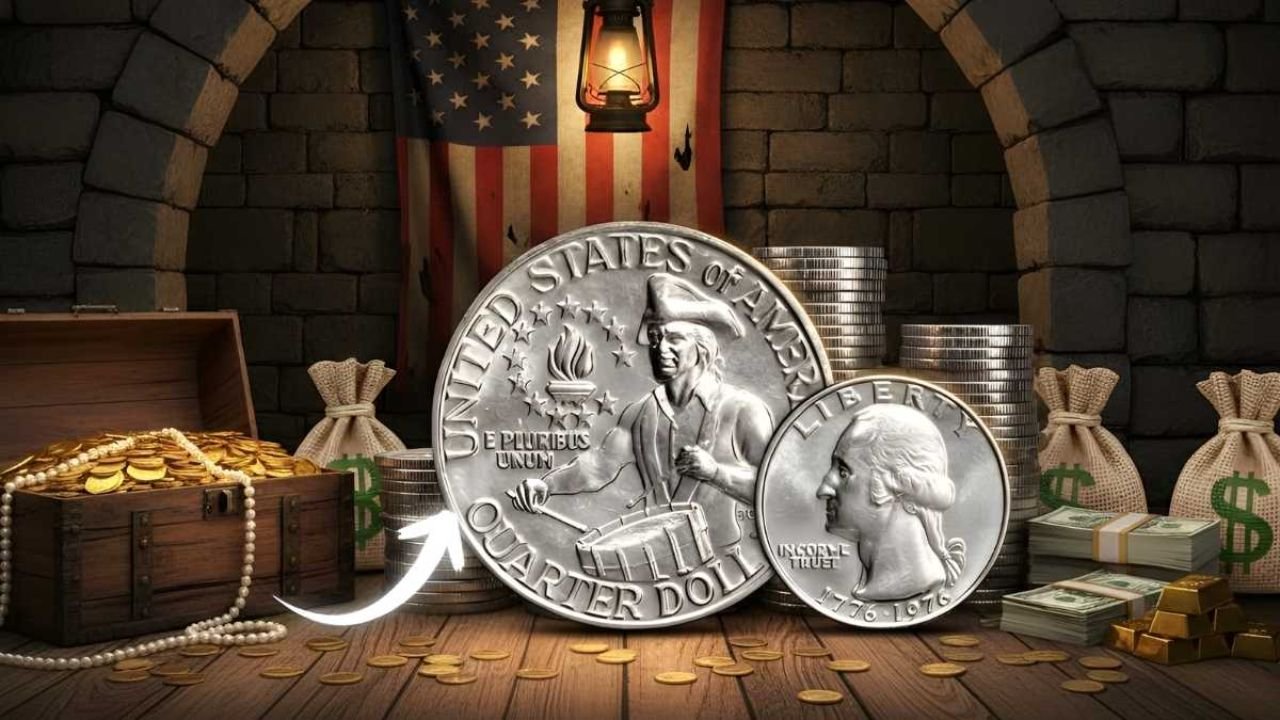
In 1976, the United States marked 200 years of independence with a nationwide celebration that extended into its coinage. Among the commemorative releases was the iconic Bicentennial Quarter, a redesign that temporarily replaced the traditional eagle reverse. Nearly five decades later, this historic coin remains one of the most talked-about collectibles in modern numismatics — especially after reports of a rare example valued at an astonishing $7.2 million.
Is such a valuation realistic? What makes certain Bicentennial Quarters worth far more than face value? And how can collectors identify genuine high-value examples in 2026? Here is a comprehensive, market-focused guide for serious collectors and investors.
The Story Behind the Bicentennial Quarter

The Bicentennial Quarter was issued by the United States Mint to commemorate America’s 200th anniversary. While the obverse retained the familiar portrait of George Washington, the reverse featured a colonial drummer designed by Jack L. Ahr. Thirteen stars encircle a torch, symbolizing the original colonies.
Unlike standard quarters, these coins carry the dual date “1776–1976,” making them instantly recognizable. They were struck in large numbers across multiple mints, including Philadelphia, Denver, and San Francisco.
Because millions entered circulation, most Bicentennial Quarters remain common. However, select varieties and exceptional conditions have created a niche premium market that continues to strengthen in 2026.
Why Some Bicentennial Quarters Command Premium Prices
While the average circulated example is worth 25 cents, certain factors dramatically increase value:
1. Silver Composition
San Francisco issued 40% silver-clad collector versions. These coins were not released into general circulation and were sold in special sets. Silver content alone provides intrinsic value, but pristine examples command significantly higher prices.
2. Proof Strikes
Proof quarters exhibit mirror-like surfaces and sharp detail. Produced specifically for collectors, these coins often carry an “S” mint mark. Deep Cameo proofs in flawless condition remain highly desirable.
3. Mint Errors

Error coins drive some of the strongest bidding activity in today’s market. Known errors include:
- Doubled die obverse or reverse
- Off-center strikes
- Clipped planchets
- Struck-through errors
Dramatic, well-preserved errors can reach thousands of dollars depending on severity and certification.
4. Ultra-High Grades
Coins graded MS67 or higher by respected grading services often trade at substantial premiums. Condition is everything in modern numismatics, and registry-set collectors compete aggressively for top-pop examples.
The $7.2 Million Quarter: Myth or Market Reality?
The headline-grabbing $7.2 million valuation likely refers to a unique or experimental strike — potentially a prototype, wrong-planchet error, or one-of-a-kind mint anomaly. In rare cases, coins that were never meant for circulation — such as pattern strikes or transitional errors — can achieve extraordinary valuations.
However, it’s important to approach such claims with discernment. As of 2026, no publicly documented Bicentennial Quarter has officially sold for $7.2 million at a major auction house. High-profile auction firms such as Heritage Auctions and Stack’s Bowers Galleries regularly handle six-figure coin sales, but multi-million-dollar Bicentennial Quarter transactions remain unverified in public records.
That said, the rare coin market has demonstrated that unique, museum-quality pieces can exceed expectations when rarity, historical intrigue, and condition align perfectly.
2026 Bicentennial Quarter Value Guide
Here is a realistic market snapshot for 2026:
Circulated Examples
Common circulated quarters: Face value to $2
Uncirculated Coins
MS63–MS65: $10–$40
MS66–MS67: $75–$500+
40% Silver Bicentennial Quarters
Proof silver (PR69–PR70): $200–$600
Silver uncirculated: $20–$100
Error Coins
Minor errors: $100–$500
Major doubled dies or dramatic off-center strikes: $1,000–$5,000+
Unique or Experimental Strikes
Potentially six to seven figures, depending on authentication and provenance.
How to Identify a Potentially Valuable Bicentennial Quarter
If you are evaluating your own coins, focus on the following checklist:
Check the Mint Mark
- No mint mark: Philadelphia
- D mint mark: Denver
- S mint mark: San Francisco (proof or silver issue)
Examine the Edge
Silver-clad coins lack the distinct copper stripe visible on standard clad quarters. A uniform silver edge may indicate 40% silver composition.
Inspect for Errors
Use magnification to detect:
- Doubling in lettering
- Misaligned strikes
- Off-center designs
- Die cracks or unusual textures
Weigh the Coin
Silver-clad quarters weigh slightly more than standard clad versions. A precise digital scale can help verify composition.
Seek Professional Certification
Submitting a coin to a respected grading service ensures authenticity and accurate market positioning. Certification significantly increases buyer confidence and resale value.
The Investment Perspective
Rare coin collecting has increasingly attracted high-net-worth individuals seeking tangible alternative assets. Unlike stocks or digital assets, rare coins offer:
- Physical ownership
- Historical significance
- Limited supply
- Global liquidity
The Bicentennial Quarter holds particular appeal because of its cultural symbolism and broad recognition. It combines historical nostalgia with the possibility — however slim — of uncovering an exceptional rarity.
Market Trends in 2026
The rare coin market continues to benefit from digital transparency, online auction platforms, and global buyer participation. Advanced authentication technology has reduced fraud risk, while registry competition has intensified demand for top-grade coins.
Modern commemoratives, once overlooked, are now gaining renewed attention as collectors seek accessible entry points into premium numismatics.
The Bicentennial Quarter occupies a unique space: widely available yet potentially extraordinary under the right circumstances.
Final Thoughts
The story of a $7.2 million Bicentennial Quarter captures the imagination because it reflects the essence of coin collecting — discovery, rarity, and historical connection. While most examples remain modest in value, select varieties continue to perform strongly in the collector market.
For investors and enthusiasts alike, the key is education, careful inspection, and professional verification. Hidden treasures are rare — but informed collectors are always positioned to recognize opportunity when it appears.
In 2026, the Bicentennial Quarter remains more than pocket change. It stands as a lasting tribute to American heritage and a compelling reminder that history and value often intersect in the most unexpected places.