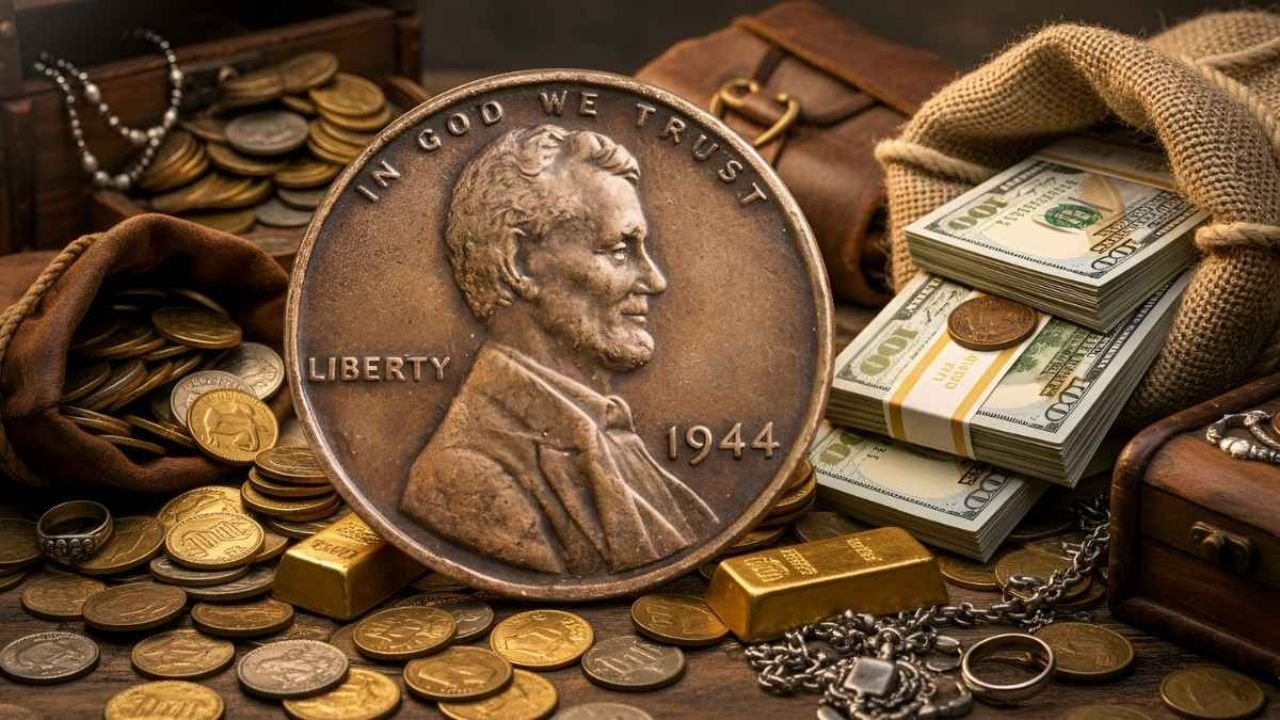
For decades, the Lincoln Wheat penny has captured the imagination of collectors and investors alike. At first glance, it may appear to be nothing more than an old one-cent coin. Yet certain rare varieties have commanded prices reaching $50,000—and in some cases, far more.
What makes this humble copper coin so valuable? The answer lies in rarity, condition, and the fascinating production errors that transformed everyday currency into prized assets.
The Birth of an American Icon
The Lincoln Wheat Penny was introduced in 1909 to commemorate the 100th anniversary of President Abraham Lincoln’s birth. It marked the first time a real historical figure appeared on a regularly circulating U.S. coin.
Designed by sculptor Victor David Brenner, the obverse features Lincoln’s portrait, while the reverse displays two wheat stalks framing the denomination—hence the nickname “Wheat penny.”
Minted from 1909 through 1958, the series spans pivotal chapters in American history, including World War I, the Great Depression, and World War II. That historical depth adds lasting appeal for collectors.
Why Some Wheat Pennies Are Worth $50,000
Most Wheat pennies are common. Billions were struck, and many survive in worn condition. However, specific dates and minting anomalies have become exceptionally scarce.
A recently publicized discovery involved a rare Wheat penny found in ordinary pocket change and later valued at $50,000. Its extraordinary price was driven by three factors:
- A rare variety or minting error
- Exceptional preservation
- Verified authentication by a professional grading service
When these elements align, even a one-cent coin can become a five-figure collectible.
Key Rare Lincoln Wheat Pennies to Know
Certain issues stand out as cornerstone pieces within the series. Advanced collectors and investors consistently seek these coins:
1909-S VDB
The first-year issue featuring Brenner’s initials “VDB” on the reverse, struck at the San Francisco Mint. Limited mintage and historical importance make it one of the most desirable early Lincoln cents.
1914-D
Produced at the Denver Mint in relatively low numbers, this coin is scarce in high grades and commands strong premiums.
1922 No D
In 1922, only Denver struck Lincoln cents. A die issue resulted in coins missing the “D” mint mark, creating one of the series’ most famous varieties.
1931-S
Low mintage combined with strong collector demand makes this issue particularly valuable in Mint State.
1943 Copper Penny
During World War II, pennies were struck in zinc-coated steel to conserve copper for military use. A small number were mistakenly struck in copper, creating one of the rarest and most valuable modern U.S. coins.
1944 Steel Penny
The reverse scenario occurred the following year when leftover steel planchets were used accidentally. These coins are extremely scarce.
1955 Doubled Die Obverse
One of the most dramatic error coins ever produced, showing clear doubling in the date and lettering. It remains highly sought after in all grades.
The Critical Role of Condition
Condition often determines whether a coin is worth $200 or $20,000.
Coins are graded on a 70-point scale, ranging from heavily worn to flawless Mint State. A rare Wheat penny in circulated condition may be valuable, but the same coin in pristine, original condition can command multiples of that price.
Professional third-party grading services authenticate and encapsulate coins, providing standardized evaluation and increasing buyer confidence. For investment-grade pieces, certification is essential.
Approximate Value Snapshot
While prices fluctuate with market demand and grade, here is a general overview of how key Wheat pennies perform:
- 1909-S VDB: Thousands in Mint State
- 1914-D: Up to tens of thousands in top grades
- 1922 No D: Five-figure potential in high condition
- 1943 Copper: Six-figure auction results
- 1944 Steel: Strong six-figure sales in exceptional condition
- 1955 Doubled Die: Five figures in premium Mint State
The $50,000 valuation often applies to rare varieties preserved in outstanding condition rather than heavily circulated examples.
Could You Still Find One in Change?
Although Wheat pennies were last minted in 1958, they occasionally surface in circulation, coin rolls, estate collections, and inherited jars.
Many people overlook them, assuming they are ordinary old coins. However, sharp collectors inspect every Wheat penny carefully, paying attention to:
- Date and mint mark
- Surface quality and original luster
- Signs of doubling or die anomalies
- Unusual metal composition
While the odds are slim, remarkable finds have happened—and continue to happen.
Market Trends in 2026
In 2026, the rare coin market remains resilient. Tangible assets with historical significance continue to attract financially sophisticated buyers seeking portfolio diversification.
High-quality, certified Wheat pennies—particularly key dates and dramatic error varieties—have demonstrated consistent demand at major auctions. Meanwhile, common examples remain affordable entry points for new collectors.
The market rewards rarity and condition. Premium examples with strong eye appeal frequently outperform average-grade coins.
Smart Strategies for Collectors and Investors
If you are considering entering the Wheat penny market, focus on strategy rather than speculation.
Educate Yourself
Study key dates, mint marks, and error diagnostics. Knowledge protects against overpaying or acquiring altered coins.
Prioritize Quality Over Quantity
One exceptional coin often outperforms a large group of average pieces.
Verify Authentication
Always seek coins certified by reputable grading services for high-value purchases.
Preserve Properly
Store coins in climate-controlled conditions using protective holders to maintain long-term value.
Monitor Auction Results
Auction data provides real-time insight into market demand and pricing trends.
The Enduring Legacy of the Wheat Penny
The Lincoln Wheat penny represents more than one cent of currency. It symbolizes innovation in American coin design and reflects decades of national history.
For some, it is a nostalgic reminder of childhood coin jars. For others, it is a serious investment vehicle backed by rarity and collector demand.
And occasionally, it is a $50,000 surprise hiding in plain sight.
That possibility—however rare—is what continues to fuel the fascination. In a world dominated by digital transactions, the idea that a small copper coin could hold extraordinary value remains both timeless and compelling.