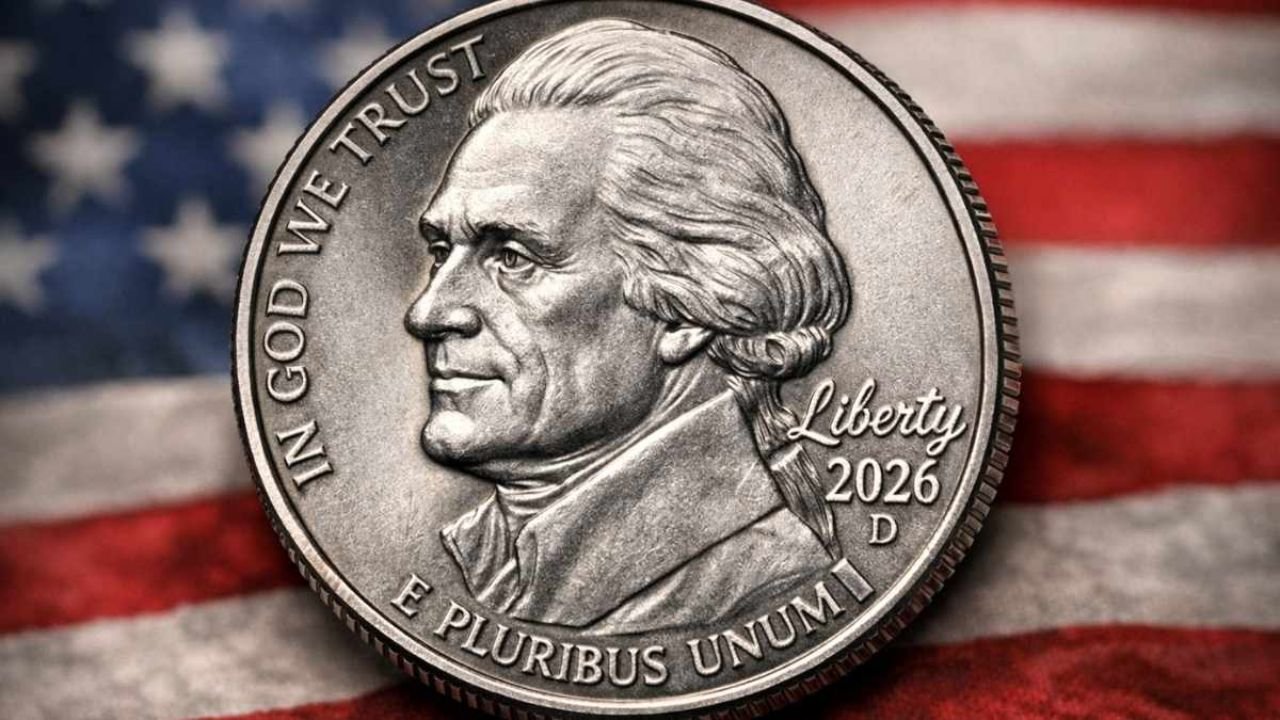
The Jefferson Nickel has quietly anchored American pocket change since 1938. Featuring President Thomas Jefferson on the obverse and his Virginia estate, Monticello, on the reverse, the coin blends historical legacy with everyday utility. While billions have been struck over the decades, a small number of rare dates, mint errors, and special issues have elevated certain Jefferson Nickels into serious investment territory.
In 2026, demand for high-grade, certified examples remains strong. For collectors with an eye for detail and a long-term mindset, these five rare Jefferson Nickels stand out as the most valuable and compelling pieces in the series.
1. 1939 Doubled Monticello Nickel
Among early Jefferson Nickel varieties, the 1939 Doubled Monticello is a headline maker.
This dramatic doubled die error appears on the reverse, most noticeably in the inscriptions “Monticello” and “Five Cents.” The doubling is bold enough to be seen with the naked eye, making it one of the most recognizable error coins in U.S. numismatics.
High-grade examples are scarce. While circulated pieces may trade for moderate premiums, sharply struck, mint-state coins certified by top grading services can command thousands of dollars at auction.
Beyond its price tag, this coin represents one of the first major error varieties in the Jefferson series. It remains a foundational piece for serious collectors building a premium set.
2. 1942–1945 Silver War Nickels
During World War II, metal conservation became a national priority. To preserve nickel for military production, the U.S. Mint altered the composition of five-cent coins from 1942 through 1945.
These “War Nickels” contain 35% silver, along with copper and manganese. They are easy to identify by the large mint mark placed above Monticello on the reverse — a distinctive feature unique to these years.
While millions were minted, certain dates and mint marks are significantly scarcer in high grades. Fully struck examples with original luster and minimal contact marks are especially desirable.
Collectors value these coins for more than their silver content. They symbolize a defining moment in American history, when even everyday currency adapted to support the war effort. In premium condition, select examples can reach substantial three- or four-figure prices.
3. 1950-D Jefferson Nickel
The 1950-D Jefferson Nickel is often called the “key date” of the regular-issue series.
With a mintage of just 2.6 million coins, it holds the distinction of being one of the lowest production figures in the entire Jefferson lineup. Once collectors recognized its scarcity, widespread hoarding followed, limiting the number that circulated heavily.
Because many were saved early, mint-state examples are available — but high-quality specimens with strong eye appeal, sharp steps on Monticello, and minimal abrasions are still competitive in today’s market.
Certified coins with full design details can sell for hundreds or thousands of dollars, depending on grade. The 1950-D remains a benchmark acquisition for collectors seeking both historical significance and long-term value potential.
4. 1964 Special Mint Set Nickel
The 1964 Special Mint Set (SMS) Jefferson Nickel is one of the most intriguing modern rarities.
Unlike standard circulation coins, these nickels exhibit a distinct satin finish and unusually sharp details. They were not officially released in regular mint sets, and their origins remain a subject of ongoing discussion among numismatists.
What makes this coin exceptional is its extreme scarcity. Only a small number are believed to exist, and confirmed examples are highly sought after by advanced collectors.
When authenticated and graded at high levels, these coins can command impressive five-figure prices. Their mysterious background, combined with superior strike quality, positions them as elite pieces within the Jefferson series.
For investors focused on rarity above all else, the 1964 SMS Nickel represents a compelling acquisition.
5. 2004–2005 Westward Journey Varieties
In 2004 and 2005, the U.S. Mint temporarily redesigned the Jefferson Nickel to commemorate the bicentennial of the Lewis and Clark expedition.
These “Westward Journey” nickels introduced fresh reverse designs, including the Peace Medal, Keelboat, American Bison, and Ocean in View motifs. While most were produced in large numbers, specific doubled dies, die cracks, and ultra-high-grade examples have become collector favorites.
Particularly valuable are coins graded at the top of the population reports, where even modern issues can achieve substantial premiums.
These designs also mark a stylistic turning point in the series, blending modern engraving with historical storytelling. For collectors who appreciate contemporary coinage with upside potential, select Westward Journey nickels offer a dynamic entry point.
Why Condition and Certification Matter
In today’s premium coin market, rarity alone is not enough. Condition drives value.
Small details — such as surface preservation, strike sharpness, luster, and the presence of “Full Steps” on Monticello — can dramatically impact pricing. Coins graded by respected third-party services provide transparency, authentication, and liquidity in the resale market.
For serious buyers and investors, certification is no longer optional. It protects capital and ensures that premium prices are justified by objective grading standards.
The Reality Behind Million-Dollar Claims
Online headlines often claim that ordinary Jefferson Nickels are worth millions. In reality, values are grounded in scarcity, demand, and condition.
While some U.S. coins have achieved extraordinary auction records, Jefferson Nickels typically reach high value only in rare varieties or exceptional grades. Understanding market fundamentals helps collectors avoid hype and focus on verifiable opportunities.
The true reward lies in knowledge, discipline, and strategic acquisition — not speculation fueled by viral stories.
How to Identify Valuable Jefferson Nickels
Spotting a rare Jefferson Nickel requires attention to detail:
- Check mint marks and mintage figures.
- Examine inscriptions for doubling or unusual spacing.
- Look for distinctive finishes or composition changes.
- Use magnification to inspect strike quality and surface condition.
- Verify authenticity through professional grading services.
Education is a collector’s strongest asset. The more you understand about die varieties and grading standards, the more confident you become in evaluating potential finds.
The Investment Outlook for 2026
In a world increasingly focused on digital assets, tangible collectibles continue to attract financially sophisticated buyers. Rare coins offer historical depth, physical ownership, and global liquidity.
Jefferson Nickels, in particular, remain accessible compared to ultra-high-end rarities in other series. This balance of affordability and upside potential keeps demand resilient.
For investors seeking diversification beyond traditional markets, carefully selected key dates and error varieties can complement a broader wealth strategy.
Final Thoughts
The Jefferson Nickel may be a humble five-cent coin, but its rare varieties tell stories of wartime adaptation, minting anomalies, and limited production runs.
From the dramatic 1939 Doubled Monticello to the elusive 1964 Special Mint Set issue and the classic 1950-D key date, these coins represent meaningful opportunities for collectors in 2026.
Value in numismatics is built on rarity, condition, and informed decision-making. For those willing to study the details and invest with intention, rare Jefferson Nickels offer more than monetary potential — they offer a connection to history and the enduring appeal of tangible wealth.