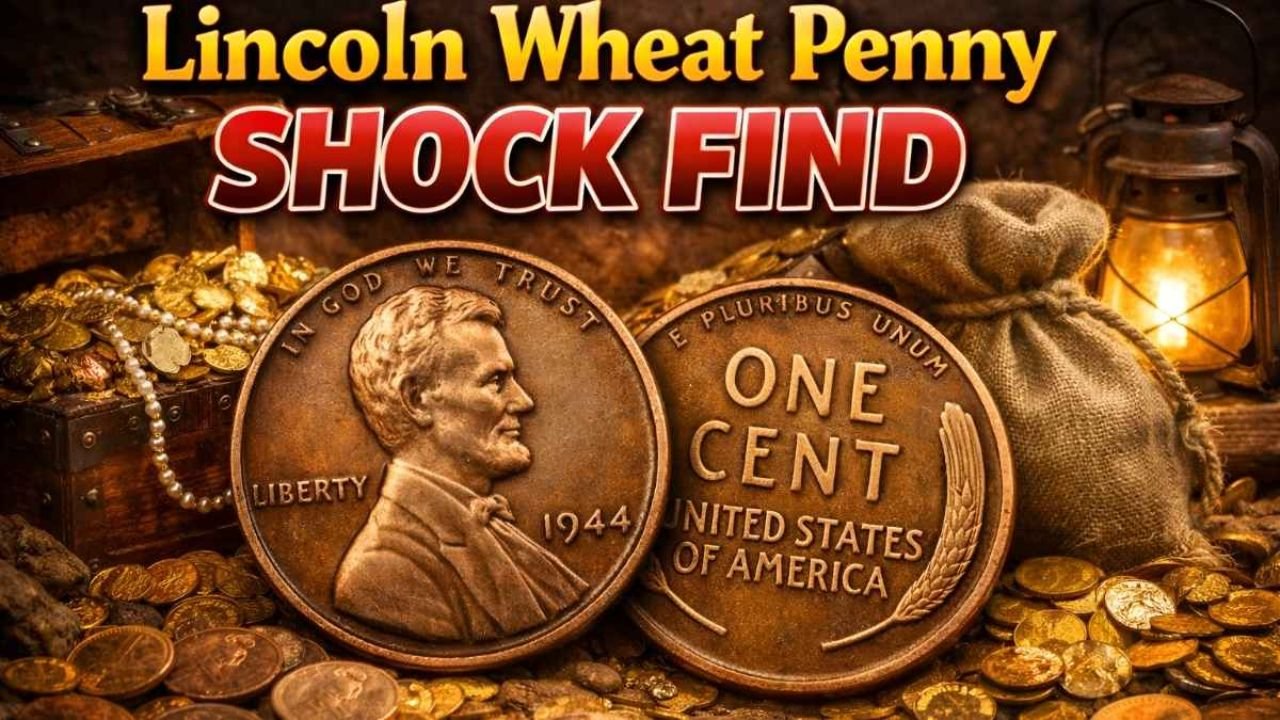
The idea that a single penny could be worth $220 million sounds like pure fiction. Yet headlines making this claim continue to circulate, reigniting global interest in one of America’s most iconic coins: the Lincoln Wheat penny.
While no Wheat penny has ever approached a nine-figure sale, certain rare varieties have achieved six- and even seven-figure valuations. In 2026, the Lincoln Wheat cent remains one of the most actively collected and widely discussed coins in modern numismatics — blending history, scarcity, and the enduring thrill of discovery.
The Birth of an American Icon
The Lincoln Wheat penny was introduced in 1909 to commemorate the 100th anniversary of Abraham Lincoln’s birth. Designed by Victor David Brenner and struck by the United States Mint, it marked a turning point in U.S. coinage history.
For the first time, a real historical figure appeared on a regularly circulating American coin. The obverse featured Lincoln’s dignified profile, while the reverse displayed two wheat stalks symbolizing national prosperity — a design used through 1958.
Over nearly 50 years of production, billions were minted. Most remain common. But hidden among those billions are key dates and error varieties that have reshaped the coin’s legacy.
Where the $220 Million Myth Began
The $220 million valuation is not grounded in documented auction results. Instead, it represents an exaggerated projection — often attached to ultra-rare error coins such as the 1943 copper penny or hypothetical one-of-a-kind specimens in flawless condition.
In reality, even the rarest Lincoln Wheat cents have sold in the high six-figure or low seven-figure range, not hundreds of millions. However, the myth persists because it captures the imagination. The possibility that a humble one-cent coin could transform into generational wealth is a powerful narrative.
And while $220 million is fantasy, six-figure Wheat pennies are very real.
The Truly Valuable Wheat Pennies
Several issues stand out as legitimate heavyweights in the collector market.
1909-S VDB
This first-year issue from San Francisco features Brenner’s initials “VDB” on the reverse. With limited mintage and strong collector demand, high-grade examples regularly command five-figure prices.
1914-D
A low-mintage Denver issue that saw heavy circulation, making well-preserved examples scarce and valuable.
1922 No D
Produced in Denver, some coins were struck without a visible mintmark due to die wear. These error varieties are highly collectible.
1955 Doubled Die Obverse
One of the most dramatic doubled die errors in U.S. history, showing bold doubling in the date and lettering.
1943 Copper Penny
During World War II, pennies were supposed to be struck in zinc-coated steel to conserve copper. A few were mistakenly struck in bronze. These rare survivors have sold for hundreds of thousands — with top examples surpassing $1 million in elite auction environments.
These are the coins that fuel sensational headlines.
What Wheat Pennies Are Actually Worth in 2026
Here is a realistic value overview:
- Common circulated dates: $0.05 to $0.30
- Semi-key dates: $50 to $500+
- 1909-S VDB (Mint State): $5,000 to $50,000+
- 1914-D (High Grade): $10,000 to $100,000+
- 1943 Copper Penny: $250,000 to over $1 million depending on grade
Values depend heavily on condition, certification, eye appeal, and provenance.
While no Lincoln Wheat penny has ever sold for $220 million, select examples undeniably rank among the most valuable small-denomination coins ever produced.
Why the Lincoln Wheat Penny Still Captivates Collectors
Historical Significance
The coin bridges early 20th-century America, two World Wars, and the Great Depression. It reflects economic and cultural transitions across five decades.
Accessibility
Unlike many rare coin series, Wheat pennies are widely available, making them an entry point for beginners while still offering elite rarities for advanced collectors.
Strong Market Liquidity
High-profile sales at firms such as Heritage Auctions and Stack’s Bowers Galleries demonstrate sustained global demand for certified key dates.
Emotional Appeal
Few coins evoke nostalgia like the Wheat cent. For many, it represents childhood coin jars, inherited collections, or the first spark of interest in history.
How to Check Your Change Jar
While the odds of finding a six-figure rarity in circulation are extremely slim, examining older coins can still be worthwhile.
Focus on:
- Dates between 1909 and 1958
- Mintmarks beneath the date (S for San Francisco, D for Denver)
- Signs of doubling in the date or lettering
- 1943 pennies that are not magnetic (possible copper)
- 1944 pennies that stick to a magnet (possible steel)
Never clean a coin. Cleaning can dramatically reduce its value.
If you suspect a rare find, professional authentication is essential before attempting a sale.
Separating Hype from Opportunity
In today’s digital media landscape, extreme valuations generate clicks. The $220 million figure functions as a headline magnet rather than a market reality.
However, dismissing all hype would overlook a critical truth: rare Wheat pennies have created life-changing returns for collectors who recognized their value early.
The lesson is not to chase fantasy numbers but to understand rarity, demand, and condition.
The Enduring Thrill of Discovery
Coin collecting endures because it combines history, craftsmanship, and the possibility of surprise. Every old penny carries a story — and occasionally, significant value.
Even if the $220 million penny remains mythical, the excitement surrounding it keeps new generations engaged in numismatics.
For serious collectors and investors in 2026, the Lincoln Wheat penny remains one of the most dynamic and culturally resonant U.S. coin series.
Final Thoughts
The Lincoln Wheat penny is proof that small denominations can hold substantial importance. While no coin in the series has reached $220 million, documented sales in the six- and seven-figure range confirm its enduring financial and historical value.
Behind every exaggerated headline lies a deeper truth: rarity, condition, and provenance matter more than speculation.
So while your change jar is unlikely to contain a nine-figure treasure, it may still hold a meaningful piece of American history — and perhaps a surprisingly valuable one at that.