Few coins capture the imagination quite like the Lincoln Wheat penny. Small in size yet immense in historical significance, this iconic one-cent piece has evolved from everyday pocket change into one of the most pursued collectibles in American numismatics. While most examples remain modest in value, a select few rare varieties have achieved extraordinary status — with some estimates placing the finest specimens in the multi-million-dollar range.
In 2026, interest in high-grade and rare Wheat pennies continues to accelerate, driven by global collectors, alternative asset investors, and the timeless appeal of American coinage history.
The Birth of an American Classic
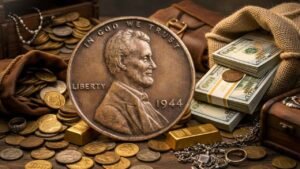
The Lincoln cent was introduced in 1909 to commemorate the 100th anniversary of Abraham Lincoln’s birth. Designed by Victor David Brenner and produced by the United States Mint, it marked a turning point in U.S. coinage.
For the first time, a real historical figure appeared on a circulating American coin. The obverse featured Lincoln’s profile, while the reverse displayed two wheat stalks framing the denomination — a design that remained in use until 1958.
Over nearly five decades of production, billions were struck. Yet within those vast numbers lie some of the rarest and most valuable coins ever discovered.
Why Certain Wheat Pennies Command Millions
The extraordinary values attached to select Wheat pennies stem from a powerful combination of factors:
Low Mintage and Scarcity
Coins struck in limited numbers naturally command higher premiums. When survival rates are also low, scarcity intensifies.
Minting Errors
Production anomalies such as doubled dies, wrong metal planchets, or missing mintmarks create unique varieties that were never intended for circulation.
Condition and Grade
Coins preserved in Mint State condition — particularly those certified at the highest levels — can be worth exponentially more than worn examples.
Historical Context
Coins tied to major historical moments, especially wartime production shifts, hold additional narrative appeal.
When these elements converge, even a one-cent coin can become a multimillion-dollar asset.
The Legendary 1943 Copper Penny
Among all Lincoln Wheat cents, none is more famous than the 1943 copper penny.
During World War II, copper was reserved for military use. In 1943, pennies were struck primarily in zinc-coated steel to conserve resources. However, a small number of leftover copper planchets from 1942 were mistakenly used.
The result was a rare error coin: a 1943 penny struck in bronze rather than steel.
Fewer than two dozen authentic examples are believed to exist across all mints. Over the years, certified specimens have sold for hundreds of thousands — and in exceptional condition, valuations have climbed into the seven-figure range.
Speculative estimates suggesting values up to $15 million typically assume an ultra-high-grade specimen with impeccable provenance entering a competitive auction environment. While such figures represent the uppermost theoretical ceiling, the coin’s rarity undeniably places it among the most coveted in American history.
Other High-Value Wheat Penny Rarities
While the 1943 copper cent dominates headlines, other issues also command impressive prices.
1944 Steel Penny
In 1944, the Mint returned to copper production. A few steel planchets left over from 1943 were accidentally struck with 1944 dies. These rare errors are highly prized and regularly reach six-figure valuations in top condition.
1909-S VDB
The first-year issue featuring Brenner’s initials “VDB” on the reverse saw limited production at the San Francisco Mint. This key date remains one of the most recognized and valuable regular-issue Wheat cents.
1914-D
With relatively low mintage and heavy circulation, high-grade examples of this Denver issue are scarce and expensive.
1955 Doubled Die Obverse
This dramatic error displays bold doubling on the date and inscriptions. It remains one of the most visually striking and collectible doubled die varieties ever produced.
2026 Market Value Snapshot
As of 2026, the Lincoln Wheat penny market remains strong:
- Common circulated dates: $0.05 to $0.25
- Semi-key dates (e.g., 1931-S, 1922 No D): $50 to $500+
- 1909-S VDB (Mint State): $5,000 to $50,000+
- 1944 Steel Penny: $75,000 to $250,000+
- 1943 Copper Penny: $250,000 to $1 million+, with theoretical top-end projections significantly higher
Values depend heavily on grade, eye appeal, and certification.
Authentication: The Critical Step
Because of their immense value, rare Wheat pennies are frequently counterfeited. Altered dates, copper-plated steel cents, and manipulated mintmarks are common deceptive practices.
Professional third-party grading services authenticate and encapsulate coins, providing confidence to buyers and sellers. For high-value transactions, certification is non-negotiable.
Without proper authentication, even a genuine rarity can struggle to achieve its full market potential.
Investment Perspective in 2026
Rare coins continue to attract investors seeking diversification beyond traditional markets. Lincoln Wheat pennies offer several advantages:
- Tangible ownership
- Limited supply
- Strong collector base
- Historical narrative appeal
High-net-worth collectors often pursue top-graded examples for registry competition, pushing premium prices even higher for the finest known specimens.
At the same time, entry-level collectors can participate by assembling affordable date sets, making the series accessible across budget levels.
How to Check Your Wheat Pennies
For those searching through inherited collections or old coin jars, a few practical steps can help identify potential treasures:
- Examine the date carefully, especially 1909, 1914, 1922, 1931, 1943, 1944, and 1955.
- Use a magnet to test 1943 pennies. Steel cents will stick; genuine copper versions will not.
- Inspect mintmarks beneath the date (S for San Francisco, D for Denver).
- Avoid cleaning coins, as cleaning significantly reduces value.
If you suspect a rare find, consult a professional before attempting any restoration or sale.
The Enduring Allure of the Lincoln Wheat Penny
More than a century after its introduction, the Lincoln Wheat penny remains a symbol of American craftsmanship and resilience. It reflects an era of industrial expansion, global conflict, and evolving monetary policy.
The idea that a humble one-cent coin could be worth millions continues to inspire collectors around the world. While the odds of discovering a $15 million rarity are extraordinarily slim, the possibility fuels the passion that defines numismatics.
Final Thoughts
The Lincoln Wheat penny proves that extraordinary value can reside in the smallest denominations. From the iconic 1909-S VDB to the legendary 1943 copper cent, these coins bridge history, rarity, and investment potential.
In 2026, the series remains one of the most dynamic sectors of the rare coin market. Whether pursued for historical appreciation, portfolio diversification, or the thrill of discovery, the Lincoln Wheat penny continues to demonstrate that even a single cent can hold remarkable worth.